The short answer
A successful kids ATV OEM program starts with a proven base platform and a written market brief. Buyers should separate cosmetic customization from functional changes, approve one controlled sample, review compliance impact before production, and freeze graphics, labels, manuals, packaging, components, inspection criteria, and shipment records in a single revision-controlled specification.
Private labeling a children’s electric ATV involves much more than adding a logo to an existing body. The product, artwork, user information, carton, components, and documentation must all tell the same story. When these decisions are made in separate email threads, a factory can produce a visually attractive sample that is difficult to repeat, test, inspect, or ship consistently.
This guide is for distributors, retailers, marketplace sellers, and brand owners evaluating an OEM kids electric ATV or ODM kids ATV project. It explains how to choose a starting platform, define a realistic customization level, control the approved sample, prepare private-label packaging, and connect customer requirements with factory testing and shipment inspection. It avoids universal promises because feasibility, cost, testing, and lead time depend on the exact model and destination market.
1. Write the commercial brief before selecting customization
A private-label program should begin with the business case, not a feature wish list. State the destination countries, target sales channel, intended customer profile, target retail position, launch timing, first-order quantity, expected annual volume, and acceptable product architecture. These inputs determine whether an existing platform, a modified platform, or a new development path is appropriate.
The sales channel changes priorities. E-commerce programs need parcel-ready packaging, clear consumer assembly, stable barcodes, and low missing-part risk. Mass retail programs may require vendor-specific testing, carton dimensions, artwork gates, and formal inspections. Distributor programs may need multilingual materials, spare parts, model continuity, and mixed-container planning. The factory cannot optimize all of these without knowing which outcome matters most.
A useful OEM project brief includes
- Destination market and the legal entity responsible for importing or placing the product on the market.
- Target rider profile, product application, voltage class, body size, and retail positioning.
- Mandatory functions, optional functions, and features that must not change.
- Logo files, color references, graphic direction, packaging style, languages, and barcode needs.
- Target quantity, sample deadline, production window, shipment method, and target landed-cost range.
- Required reports, declarations, labels, manuals, inspections, and factory records.
Separate requirements from preferences. A mandatory charger plug, warning language, or carton dimension should not be discussed with the same flexibility as an optional decorative decal. This distinction helps the supplier quote accurately and prevents later changes from consuming the sampling schedule.
2. Choose a proven base platform before creating variants
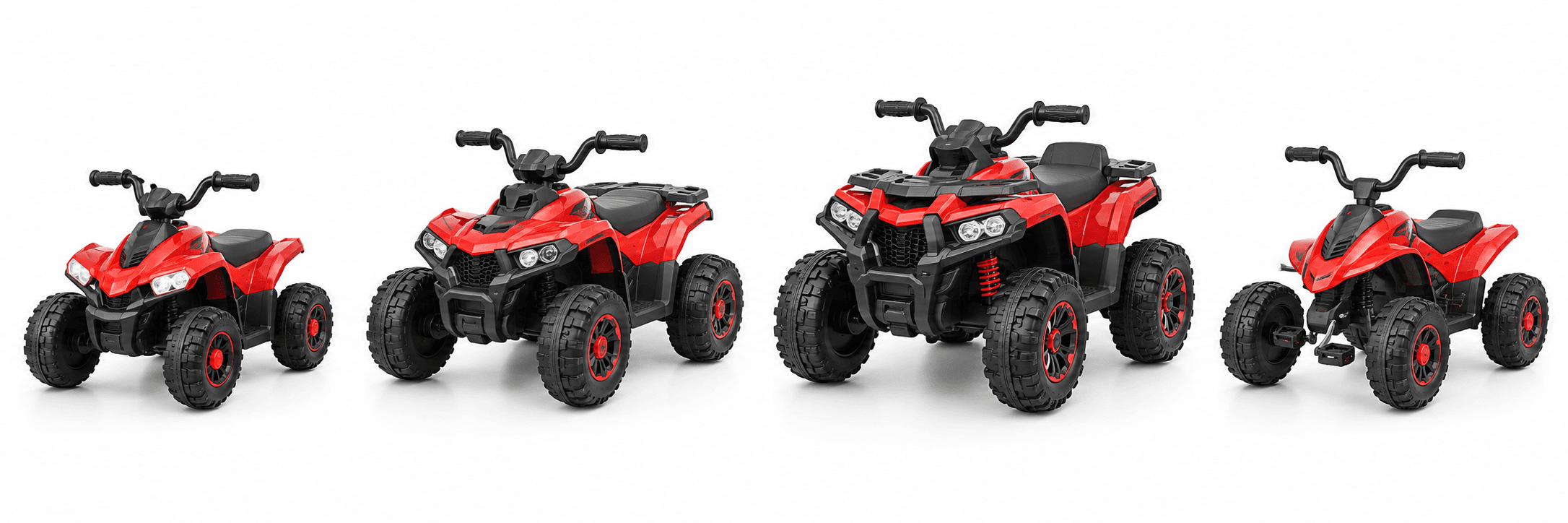
For most first private-label orders, the lowest-risk route is to customize a platform that already has established tooling, component sourcing, assembly instructions, and production experience. Existing platforms can still support meaningful brand differentiation through color, graphics, features, accessories, user materials, and packaging.
Compare complete systems rather than body photographs. Review vehicle dimensions, rider fit assumptions, battery, motors, controller, charger, wheels, control method, speed modes, forward and reverse operation, stopping behavior, lighting, sound, accessories, and pack-out. A model should support the intended product promise without requiring a collection of unproven component combinations.
| Starting platform | Likely commercial role | Customization emphasis | Main buyer check |
|---|---|---|---|
| 6V mini quad | Compact entry offer | Color, graphics, simple packaging | Physical fit, basic controls, carton efficiency |
| 12V electric ATV | Core retail range | Feature mix, wheel options, lighting, artwork | Exact drivetrain and approved option combination |
| 24V adventure quad | Larger premium range | Premium appearance, controls, accessories | Performance envelope, product mass, packaging volume |
| Pedal quad | Battery-free assortment | Color, graphics, mechanical details | Drive mechanism, ergonomics, assembly and durability |
Review the current CubRover product platforms and use the 6V vs 12V vs 24V buyer guide to compare range roles. Final specifications must be confirmed by exact model and order.
3. Separate cosmetic, functional, and structural customization
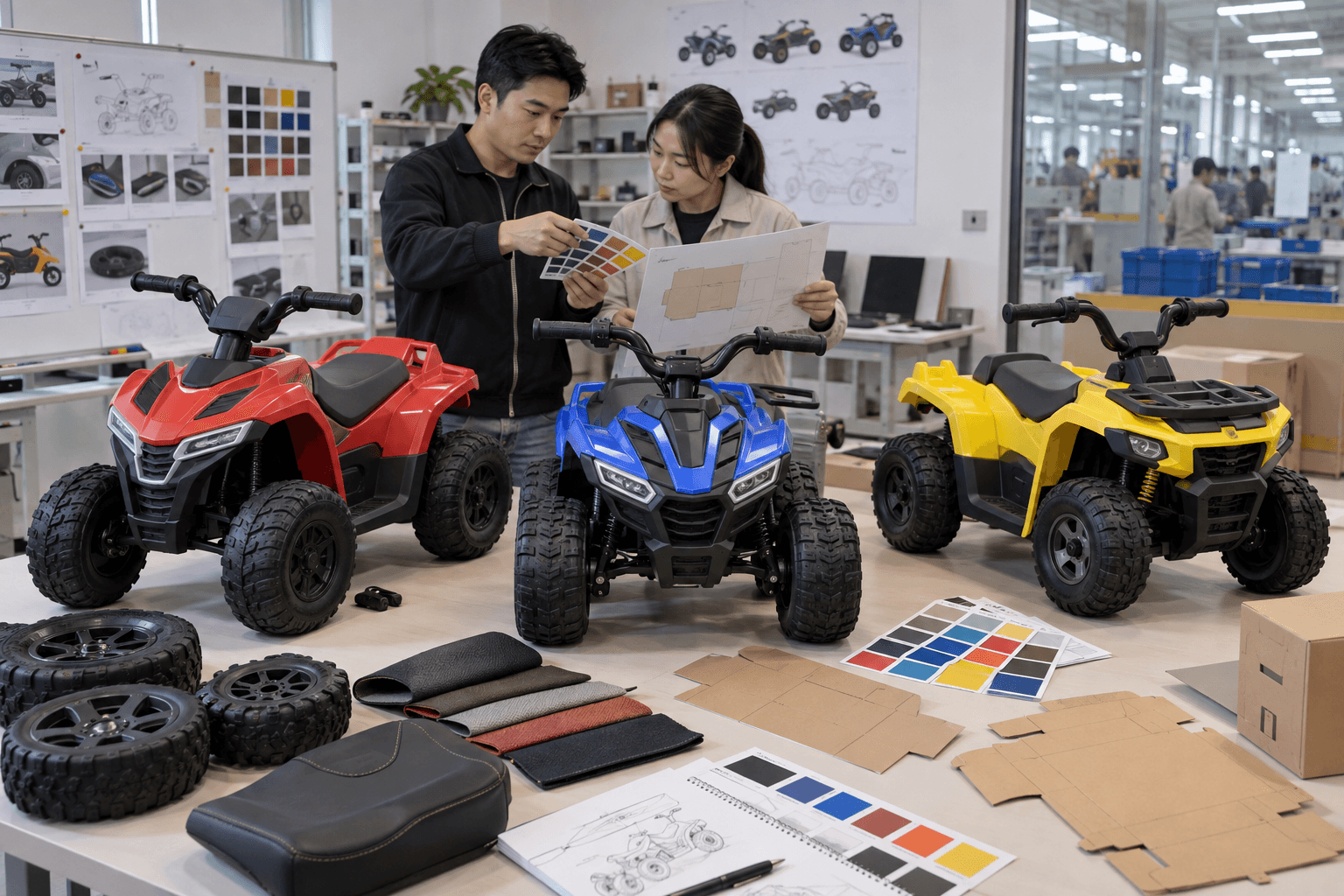
Not all customization carries the same cost, lead time, or technical risk. Cosmetic changes usually work within the existing product architecture. Functional changes alter the component or user experience. Structural changes can require tooling, engineering validation, different work instructions, and a broader compliance review.
| Level | Examples | Typical impact | Control required |
|---|---|---|---|
| Cosmetic | Body color, decals, logo, carton graphics | Artwork and material approval | Color standard, print proof, placement drawing |
| Configuration | Battery, motor count, wheels, lights, sound, seat | Cost, function, sourcing, documentation | Controlled component list and representative sample |
| Market adaptation | Charger plug, languages, warnings, labels, barcode | Market access and user information | Compliance and artwork review |
| Structural | New body, dimensions, frame, steering or tooling | Engineering, tooling, testing, longer schedule | Development plan, prototypes, validation gates |
A custom color may appear simple, but pigments or coatings can affect material evidence and appearance consistency. A new battery capacity may affect charging, runtime, mass, labeling, packing, and existing test scope. A different motor or controller can change how the product behaves. Every requested change should therefore receive a written impact review instead of being treated as an isolated purchasing substitution.
Ask the manufacturer which options have already been produced together. Catalogs sometimes display available features individually without proving that every combination is production-ready. A disciplined quotation distinguishes standard content, validated options, options requiring sample verification, and new development.
4. Turn the OEM sample into a controlled production reference
The approved sample is the most important bridge between an attractive concept and repeatable production. Approval should cover appearance, components, operation, user information, included parts, and packaging. A message saying “sample looks good” is not enough for purchasing, production, and inspection teams to follow months later.
Create a sample approval record with the factory model, private-label model, revision date, product photographs, approved color references, decal placement, component configuration, functions, charger, labels, manual, accessories, hardware, carton artwork, internal protection, and accepted deviations. Keep files in one controlled location and identify who can authorize changes.
A practical OEM sample review sequence
- Confirm model identity and measure the key dimensions against the specification.
- Compare body color, finish, logos, graphics, labels, and accessory placement with approved artwork.
- Verify the battery, motors, controller, charger, wheels, controls, lights, sound, and optional functions.
- Operate forward, reverse, speed modes, steering, stopping behavior, and charging connection under defined conditions.
- Unpack, assemble, inspect, repack, and photograph every layer of the proposed retail carton.
- Record issues, corrections, accepted deviations, and the final approved revision before purchasing production materials.
Golden samples should be stored and identified so they remain useful during production and final inspection. If physical samples cannot be retained by every party, combine the factory reference unit with a signed digital specification, high-resolution photographs, short functional videos, and pack-out records.
5. Review compliance impact before accepting changes
Private-label buyers should never assume that an existing report automatically covers a new brand, component combination, color material, charger, function, or model identifier. Compliance evidence relates to a defined product and test scope. The responsible importer or manufacturer must confirm which requirements apply and whether the final configuration is represented.
Before production, compare the final specification with report model numbers, photographs, dimensions, materials, battery, charger, electronics, and tested variants. List every difference and obtain a documented review from a qualified laboratory or compliance specialist where required. Artwork must also be checked for warnings, traceability, responsible-company information, electrical ratings, languages, and instructions.
Use the U.S. and EU importer compliance checklist as a due-diligence framework. It explains how factory testing, third-party assessment, technical records, labels, and shipment inspection fit together without treating a logo or report cover page as universal approval.
For current primary guidance, consult the U.S. CPSC Toy Safety Business Guidance and the European Commission toy-safety legislation page. Requirements and transition dates must be checked for the exact product and placing-on-market date.
Establish a change-control rule: production cannot substitute a critical component or revise approved artwork without written buyer review. The change request should state the original item, proposed item, reason, specifications, supplier, functional effect, documentation effect, cost, timing, and approval decision. This makes later inspection objective.
6. Control brand artwork, manuals, and private-label packaging
A private-label product is experienced through more than the vehicle body. The carton, unboxing sequence, manual, hardware bags, charger label, rating label, warnings, decals, and customer-support information all represent the brand. They must use the same model name, revision, language, and claims.
Provide vector logo files, defined colors, fonts or acceptable alternatives, minimum clear space, placement drawings, and prohibited uses. Request production print proofs on the actual substrate when color or durability matters. Screenshots are not reliable artwork masters, and colors viewed on different monitors are not objective approval standards.
Packaging approval should cover
- Outer carton construction, dimensions, print, shipping marks, barcode type, barcode data, and scan location.
- Internal protection, product restraint, surface sleeves, charger and accessory locations, hardware bags, and closure.
- Manual language, diagrams, warnings, assembly sequence, charging preparation, maintenance, and support contact.
- Net and gross weight, carton measurements, loading assumptions, and distribution-channel test requirements.
- Layer-by-layer pack-out photographs and the approved production artwork revision.
The kids ATV packaging and inspection guide provides a detailed route from damage analysis to pack-out validation, inspection, and container loading.
7. Translate the approved brand into factory controls
Production quality is the ability to repeat the approved configuration across a batch. The factory needs controlled bills of materials, artwork files, work instructions, incoming component checks, assembly checkpoints, end-of-line tests, packing standards, and a method for isolating nonconforming units.
For branded products, line checks should include color and graphics in addition to functional points. Inspectors can verify model identity, surface condition, decals, labels, fasteners, steering, electrical functions, selectable modes, battery and charger, accessories, manual, carton print, barcode, internal protection, and shipping marks. The exact criteria should be agreed before inspection day.
Factory testing and third-party testing have different jobs. Factory testing supports repeatable production; laboratory testing supports defined conformity evidence. Both should relate to the same controlled model. If production uses a different battery, charger, motor, material, or instruction revision from the approved sample, passing a basic function test does not resolve the configuration discrepancy.
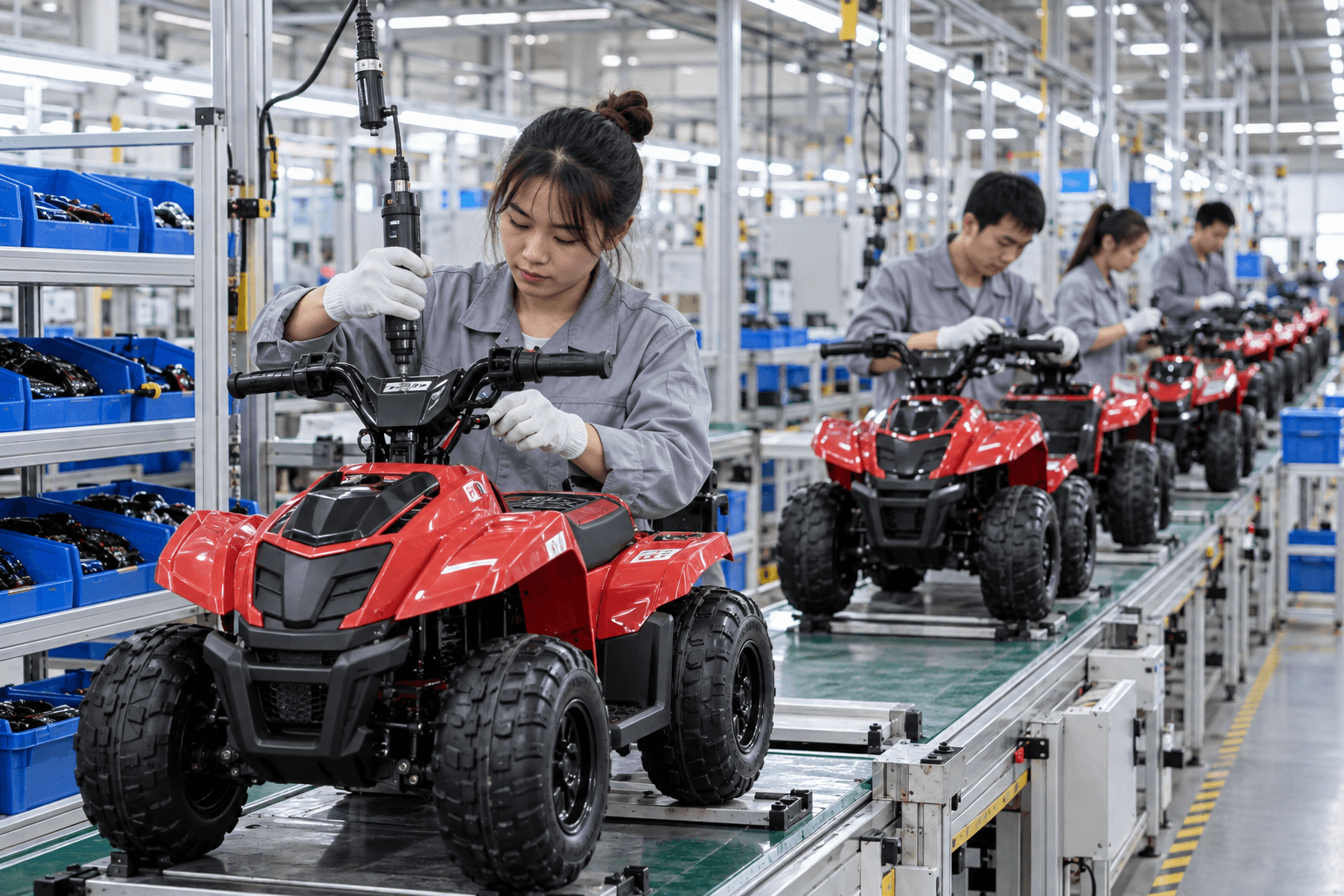
See the CubRover manufacturing workflow and quality-control approach for the factory-side checkpoints available for buyer discussion.
8. Launch one controlled program before expanding the range
A private-label assortment does not need every voltage, body, color, and option in the first order. Many buyers learn faster by launching one core platform with a controlled number of variants. This simplifies sample approval, artwork, component purchasing, inspection, spare parts, and early customer feedback.
After launch, collect structured information: model and batch, customer application, assembly questions, missing parts, charging issues, packaging damage, returns, replacement components, and feature requests. Separate isolated misuse from repeatable product or communication problems. Use that evidence to prioritize the next revision.
| Gate | Required evidence | Decision |
|---|---|---|
| Commercial | Market, channel, quantity, range role, target timing | Proceed with selected platform |
| Technical | Controlled configuration and representative sample | Freeze components and functions |
| Brand | Approved product, label, manual, and carton artwork | Release production files |
| Compliance | Model-specific review and required documents | Authorize market preparation |
| Quality | Inspection plan, criteria, records, issue process | Release acceptable production |
| Logistics | Validated pack-out, loading plan, shipment records | Authorize shipment |
Conclusion
The strongest kids ATV OEM programs are controlled product programs, not logo exercises. Begin with a realistic buyer brief, choose a stable platform, classify each customization by risk, approve one complete sample, review compliance impact, freeze artwork and packaging, and inspect production against evidence. This creates a branded product that is easier to repeat, explain, ship, and improve.
Frequently asked questions
What is the difference between OEM and ODM for kids ATVs?
OEM commonly means producing a buyer-branded product from an existing or buyer-defined specification. ODM generally includes more supplier-led design or development. In practice, clarify the exact tooling, design ownership, customization, validation, and documentation responsibilities instead of relying only on the label.
What can be customized on a private-label kids ATV?
Common areas include body color, decals, logo, wheels, seat, lights, sound, battery, motor configuration, charger, labels, manual, accessories, carton artwork, and internal packaging. Feasibility and compliance impact depend on the exact platform and requested combination.
Does a custom logo require new product testing?
A logo change alone may not require the same review as a component change, but printed materials, coatings, labels, traceability, and the legal manufacturer information still need assessment. Ask the responsible laboratory or compliance specialist to review the exact change.
How should an OEM sample be approved?
Approve a revision-controlled specification covering appearance, components, functions, labels, manual, accessories, hardware, carton artwork, internal protection, and accepted deviations. Support it with photos, videos, measurements, and a retained reference sample.
Can buyers combine several kids ATV models in one private-label program?
Potentially, subject to MOQ, component availability, production planning, testing, packaging, and loading constraints. Start by identifying a coherent range architecture and ask the factory to quote model-level and mixed-order assumptions separately.
What information is needed for an OEM quotation?
Provide the market, selected model or voltage class, quantity, target channel, must-have features, brand files, color and artwork scope, packaging expectations, required documents, sample timing, and target shipment date.
Build a controlled private-label ATV program
Send CubRover your market, preferred platform, quantity, required functions, branding scope, packaging channel, and schedule. We will organize the discussion around a repeatable product specification.
Start Your OEM Project