The short answer
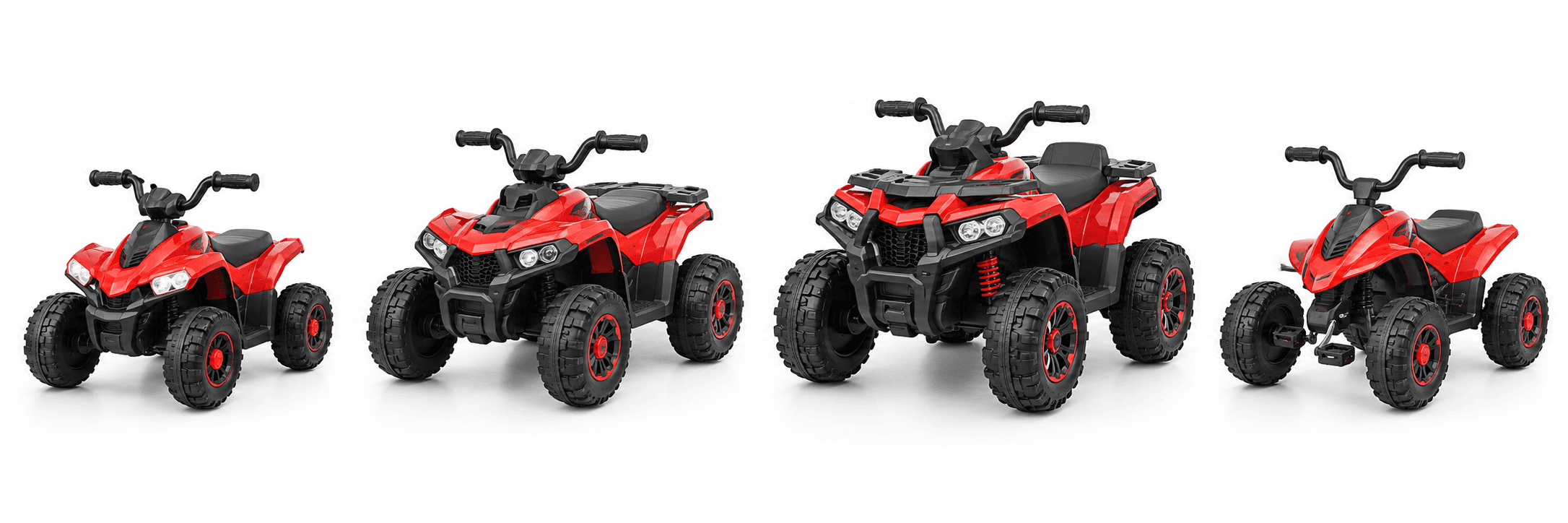
For most B2B programs, a 6V kids ATV suits a compact entry-level range, a 12V platform provides the broadest core assortment, and a 24V model supports a larger premium proposition. Voltage does not independently determine age suitability, speed, quality, or safety. Buyers should approve the complete vehicle specification, application, controls, battery, charger, packaging, and market documentation.
“Should we buy a 6V, 12V, or 24V kids ATV?” sounds like a simple comparison question. In practice, it is a range-planning decision. The right answer depends on the target rider profile, vehicle dimensions, intended surface, expected performance, retail price architecture, shipment method, and destination-market requirements. Voltage is only one part of that system.
This guide is written for importers, distributors, retailers, and private-label teams that need to turn a broad product idea into an auditable purchase specification. It does not assign universal ages or performance promises to a voltage class. Instead, it explains how an experienced buyer can compare platforms, test samples, prepare installation and packing requirements, and communicate customer requirements before production begins.
1. What voltage tells a buyer—and what it does not
Voltage describes the nominal electrical system, not the whole product. It affects how the battery, motors, controller, switches, wiring, charger, and protective devices are selected, but it does not by itself establish output, runtime, speed, climbing ability, or rider suitability. Motor quantity, motor rating, gear reduction, wheel diameter, vehicle mass, battery capacity, controller logic, and speed settings all influence the result.
Two 12V quads can therefore feel very different. A compact single-motor vehicle designed for smooth indoor or paved use is not commercially equivalent to a larger dual-motor model with different gearing and wheels. A 24V label also does not automatically mean “better.” It may increase product cost, carton volume, charging considerations, and the consequences of choosing the wrong performance envelope.
Use voltage as a platform filter, not as the final specification
A useful quotation names the exact model and revision, battery chemistry and rated capacity, motor arrangement, charger input and output, available speed modes, wheel type, vehicle dimensions, declared load assumptions, included functions, and packing configuration. Any age grading or performance statement should relate to the complete product and the applicable market assessment—not to a generic voltage rule copied from another model.
- Ask for the electrical diagram or a controlled component list when the program reaches technical review.
- Confirm whether the quoted battery, motors, controller, and charger match the sample and available reports.
- Record standard functions separately from optional functions so that combinations are not assumed.
- Treat speed, runtime, range, and slope figures as test-condition-dependent values that need a defined method.
2. Compare 6V, 12V, and 24V platforms by commercial role
The table below is a sourcing framework, not a universal age or speed chart. It helps a buyer decide which sample families deserve closer evaluation. Final claims, labels, instructions, and age grading should be based on the exact product and destination market.
| Platform | Typical range role | Potential strengths | Buyer checks |
|---|---|---|---|
| 6V mini quad | Compact entry-level or promotional range | Smaller footprint, simpler feature set, potentially efficient carton | Physical fit, single-motor behavior, surface assumptions, controls, value perception |
| 12V electric ATV | Core retail assortment | Broad model choice, flexible feature mix, accessible mid-range positioning | Motor layout, speed modes, battery capacity, electronics, wheel construction |
| 24V adventure quad | Larger premium or specialist assortment | More substantial platform and richer feature potential | Output, stopping behavior, dimensions, supervision assumptions, carton volume, handling |
A 6V model can work well when a buyer needs a compact visual footprint, straightforward controls, and a disciplined opening price point. However, reducing cost by removing needed protection, weakening connectors, or using an unsuitable charger is not a valid value strategy. The sample still needs complete functional and packaging review.
A 12V platform is often the most versatile range-building starting point because it can support different body styles, motor configurations, graphics, and accessory levels. That versatility also creates specification risk: “12V ATV” is too broad for a purchase order. The exact drivetrain, controller, battery, charger, sound or lighting module, and speed function should be frozen.
A 24V platform may support a larger vehicle concept or a more premium product story. Buyers should assess it as a different program rather than an automatic upgrade. Product mass, packaging, warehouse handling, replacement components, charging, performance controls, and end-user instructions require deliberate review.
3. Start with product application and customer requirements
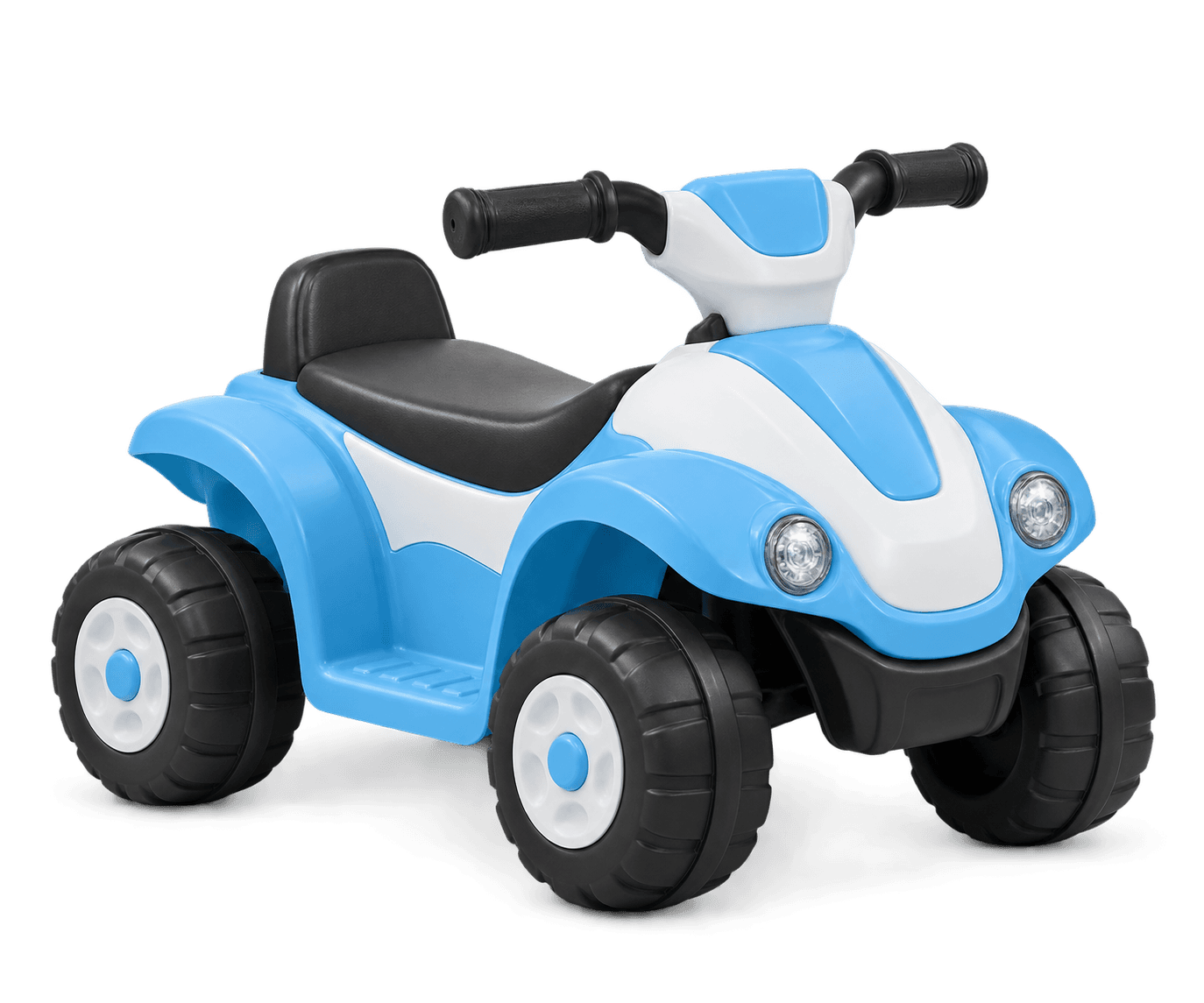
The best platform choice begins outside the factory. Define where the customer is expected to use the product, who will supervise, how it will be stored, and which retail promise the buyer wants to make. Smooth indoor floors, level paved areas, short grass, and uneven outdoor surfaces create different demands. The product manual and marketing must not imply an application that the approved vehicle was not designed to support.
Retail channel matters too. A marketplace seller may prioritize parcel resilience, clear installation preparation, barcode control, and low return risk. A mass retailer may require tight carton dimensions, shelf-ready information, and formal vendor testing. A distributor serving specialist dealers may value replaceable parts, technical documentation, and model continuity. These are commercial inputs to engineering, not details to add after the sample is approved.
Convert the market idea into a written buyer brief
- Name the destination countries and expected sales channels.
- Describe the intended rider profile and application without relying on voltage as an age proxy.
- State the target retail tier and landed-cost assumptions.
- List mandatory functions, acceptable alternatives, and prohibited changes.
- Define packaging, labeling, language, barcode, and spare-parts expectations.
- Identify the compliance evidence and shipment inspection records required before release.
Buyers can compare the current CubRover product platforms and then send a model-specific brief. For a broader supplier evaluation process, use our children’s electric ATV manufacturer checklist.
4. Test samples as complete systems
Factory testing should reproduce the decisions a buyer needs to make. Begin with identity: verify the model code, battery, motors, controller, charger, wheel set, controls, labels, and accessories against the quotation. Then review assembly, steering, forward and reverse operation, selectable modes, stopping behavior, switch response, lights or sound modules, charging connection, and visible wiring protection.
Performance observations need conditions. Record the rider load used by the factory, surface, battery state, ambient conditions, test duration, tire or wheel type, and whether the unit is an engineering sample or production-representative sample. A single promotional number without these conditions is difficult to reproduce and should not become a retail claim.
A practical sample comparison session
- Place shortlisted vehicles side by side and photograph overall scale, seating position, foot placement, steering reach, and ground clearance.
- Measure key dimensions and compare them with the specification rather than relying on catalog renderings.
- Operate every control repeatedly and note delay, consistency, noise, heat, looseness, or unexpected behavior.
- Inspect cable routing, connector retention, accessible edges, fasteners, battery restraint, and charger identification.
- Disassemble and repack the unit using the proposed instructions to expose assembly and pack-out risks.
- Record all accepted changes in a dated sample approval sheet before production.
The goal is not to simulate every laboratory assessment on the factory floor. It is to find configuration errors, unclear user steps, inconsistent functions, and unsuitable application assumptions early enough to correct them. Regulatory testing must be performed as required for the destination market and exact product.
5. Freeze the production specification before ordering
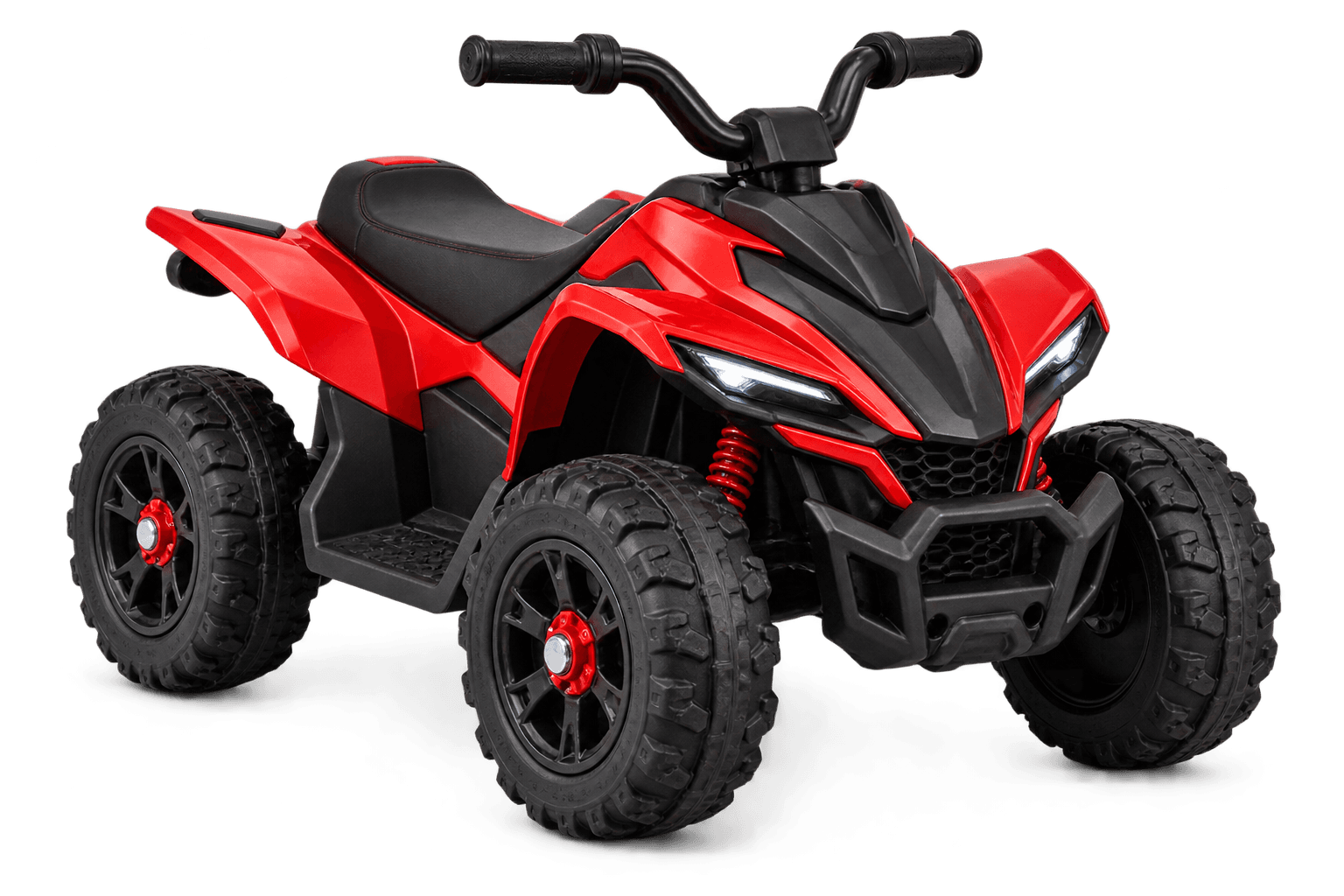
A quotation often evolves through messages, spreadsheets, sample comments, artwork files, and video calls. Before the purchase order is released, those decisions must be consolidated into one controlled specification. Otherwise, purchasing may order one component revision while quality inspectors compare production with another.
For a children’s electric ATV, the controlled record normally includes model and revision, body color, graphics, material and finish notes, battery, motor and controller arrangement, charger, controls, speed options, wheels, seat, lights, sound, accessories, hardware, warnings, rating labels, manual, carton artwork, internal protection, and pack-out photographs. Each approved substitution should be recorded with its reason and impact review.
Customization deserves special care. Changing a battery, charger, controller, motor, plastic material, coating, fastener, electronic feature, or structural part may affect function, durability, documentation, or the relevance of existing test evidence. A disciplined supplier should identify this before production instead of silently treating components as interchangeable.
6. Connect factory quality checks with market compliance
Factory quality control and third-party compliance testing serve different purposes. Factory controls help keep production consistent with the approved specification. Regulatory or buyer-required testing evaluates defined requirements using the applicable method. One cannot be used as a casual substitute for the other.
For each platform, ask which reports and certificates relate to the exact model, which components and variants they cover, when the sample was tested, and what changes occurred afterward. Compare model identifiers, photographs, dimensions, battery and charger information, materials, and age grading. Where applicability is uncertain, obtain advice from a qualified laboratory or market compliance specialist.
In the United States, the CPSC explains that the toy safety standard is the version of ASTM F963 incorporated through 16 CFR part 1250 and that children’s toys intended primarily for children 12 and under generally require testing by a CPSC-accepted third-party laboratory. Review the current CPSC toy-safety business guidance. European buyers should review the current framework on the European Commission toy-safety portal. Requirements depend on the exact product and market.
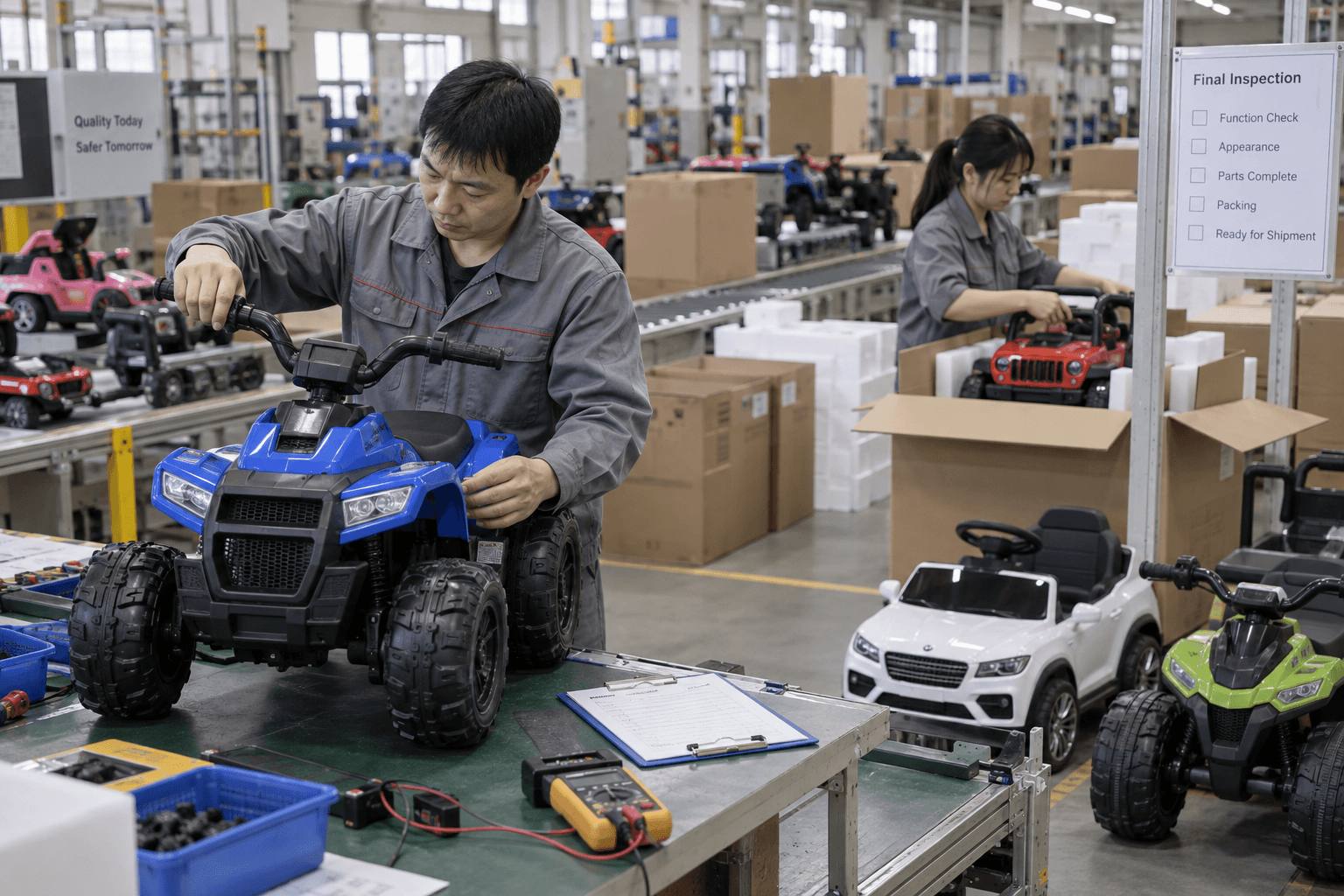
Quality checkpoints for production commonly include appearance, fit, fasteners, steering, electrical functions, charging accessories, control behavior, included parts, labels, manuals, pack-out, carton condition, and shipping marks. Agree the sampling plan, acceptance criteria, and escalation process before inspection day.
7. Include packaging and logistics in the platform comparison
A larger or higher-voltage platform can change more than unit cost. It may increase net and gross weight, carton dimensions, container utilization, warehouse handling effort, parcel surcharges, assembly steps, and the amount of internal protection required. These costs belong in the platform decision.
Ask for carton dimensions and gross weight from a production-representative pack-out, then calculate loading assumptions with a sensible allowance rather than using a perfect theoretical cube. Confirm whether wheels, handlebar, seat, battery connector, mirrors, guards, or other parts require installation. Review how hardware is bagged, how the charger is separated from painted surfaces, and how the manual directs installation preparation.
For e-commerce, focus on individual carton handling, clear part identification, consumer assembly, and resistance to repeated distribution touches. For pallet or container programs, also review stacking pattern, carton strength, moisture exposure, container bracing, and unloading sequence. Packaging approval should include photos and measurable material specifications, not only a statement that “standard export packing” will be used.
8. A buyer’s final decision framework
Choose the lowest-complexity platform that credibly fulfills the customer requirement. Extra voltage or features do not create value if they increase returns, confuse positioning, or exceed what the channel can support. Conversely, an underspecified vehicle can disappoint customers when its application, size, or feature set does not match the product page.
| Decision area | Evidence to review | Approval question |
|---|---|---|
| Market fit | Buyer brief, rider/application assumptions, retail position | Does this platform solve the intended customer job? |
| Product fit | Controlled specification and representative sample | Is the complete configuration clear and repeatable? |
| Quality | Factory testing, inspection plan, issue records | Can production be checked against agreed criteria? |
| Compliance | Model-specific reports and market documentation | Does the evidence match the exact product and market? |
| Logistics | Pack-out, carton data, loading and assembly plan | Will the product arrive and install as intended? |
| Commercial fit | MOQ, cost, lead time, spare parts, change control | Can the program remain viable after launch? |
A range may ultimately include more than one voltage class: a compact entry product, a flexible core model, and a premium vehicle. Launching all three at once is not always necessary. Many buyers reduce risk by validating one platform, learning from inspections and customer feedback, and then extending the assortment with controlled differences.
Conclusion
The best answer to “6V vs 12V vs 24V” is a documented application decision. Compare complete systems, reproduce performance observations under known conditions, freeze the approved sample, verify model-specific market evidence, and include packaging economics. That process produces a range that is easier to explain, inspect, ship, and improve.
Frequently asked questions
Is 24V always faster than 12V in a kids ATV?
No. Vehicle speed depends on the complete system, including motors, controller, gearing, wheel diameter, vehicle load, battery condition, and programmed modes. Compare declared performance only when test conditions and configurations are defined.
What voltage is best for a first private-label order?
There is no universal best voltage. Many buyers begin with a proven 12V core platform because of its range flexibility, while compact entry programs may favor 6V and larger premium programs may justify 24V. The correct choice follows the target customer, channel, application, landed cost, and compliance plan.
Can I change the battery capacity without retesting?
Do not assume so. A battery change can affect electrical behavior, charging, runtime, weight, labeling, documentation, and the applicability of previous test evidence. Review the change with the manufacturer and a qualified laboratory or compliance specialist for the destination market.
How should runtime be compared between samples?
Use the same rider load or test load, surface, route, speed mode, battery conditioning, charge procedure, and ambient conditions. Record the test method and treat the result as a condition-specific observation rather than a universal promise.
Does a higher voltage mean better quality?
No. Quality depends on design, component selection, assembly control, inspection, packaging, and consistency. A well-controlled 6V product can be more suitable for its intended range than a poorly specified 24V product.
What should be fixed in the purchase specification?
Fix the exact model revision, colors, graphics, drivetrain, battery, charger, controller, controls, wheels, functions, accessories, labels, manual, packaging, shipping marks, inspection criteria, and approved substitutions.
Build the right ATV range for your market
Tell CubRover your destination market, sales channel, target position, voltage preference, quantity, functions, and packaging requirements. We can prepare a focused platform discussion instead of a generic catalog dump.
Send Your Requirements